


With Catherine Rose
In 1965, George Everett Klippert was arrested in the Northwest Territories and charged with four counts of gross indecency. He admitted to having consensual sex with four different adult males. Because it wasn’t his first offence, a psychiatrist assessed him as “incurably homosexual.” Klippert was labeled a dangerous offender and sentenced to life in prison.
While researching gay history, Glenn Tkach discovered that in the 1950s, the classification of “criminal sexual psychopath” emerged to describe homosexuals. “This meant that prison sentences could be arbitrarily extended for indefinite periods because we were likely to reoffend for the crime of being gay,” he says.
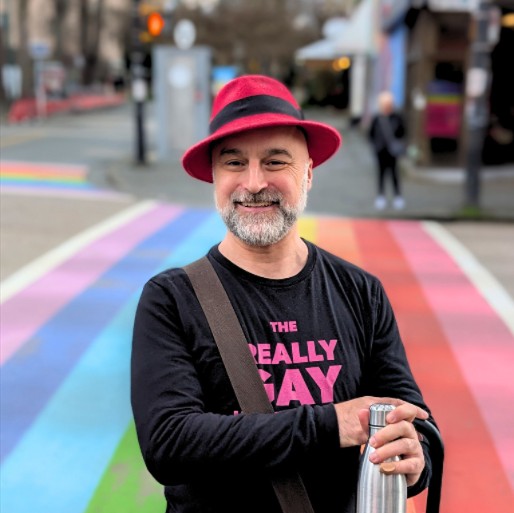
As he explains, gross indecency was a vague term used to lock up or institutionalize gay men and that could mean anything from sexual assault to two men walking down the street holding hands.*
Klippert had been in prison for four years when homosexuality was decriminalized. Unfortunately for him the law was not retroactive, and he would stay in prison until 1971.
“[Klippert’s imprisonment] became a real catalyst for discussions in Canada and led to the decriminalization of homosexuality in 1969,” says Glenn.
Broken Laws doubles as a fundraiser for local historian and artist Tom Carter, who helped Glenn gather personal stories for his research. “Tom was recently hospitalized, and this event is a way for our community to support one of our own,” says Glenn.
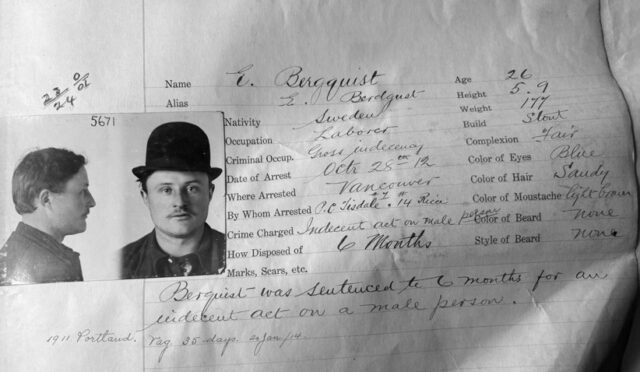
Also included in the talk is Glenn’s research from the Vancouver Police Museum & Archives, where he was invited to take a fresh look at history through a queer lens.
Some of his favourite finds were arrest records from 1912 and 1913. “A surprising number of cases were tied to queer identity,” he said. One case that stood out was a person accused of ‘masquerading as a woman’ and charged with vagrancy. “It seems likely they were a transgender woman trying to express their identity somewhat openly,” he says.
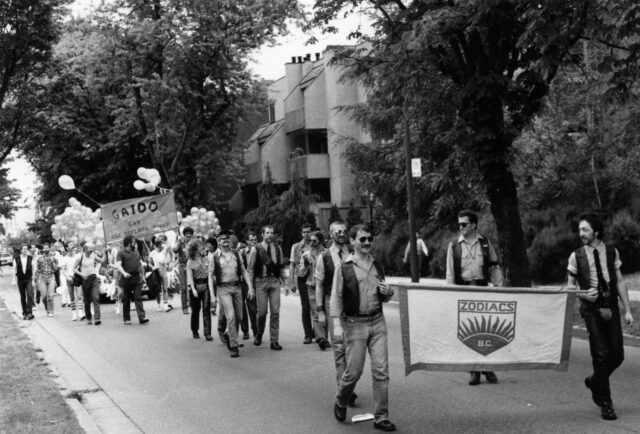
For decades, queer stories were dismissed as unimportant or indecent, while others vanished through self-erasure. “Letters were burned, photographs destroyed, and identities were deliberately hidden to protect loved ones,” he says.
I was surprised to learn from Glenn that Pierre Trudeau’s famous 1967 quote that “the state has no place in the bedrooms of the nation,” was originally about decriminalizing queer people. “There is a perception that queer history is only of interest to a niche group of people, that it’s history that happened on the sidelines,” he says. “The story of how queer people attained more equality and better human rights is the story of how Canada became a freer country and a less discriminatory one.”
Broken Laws takes place at 3:00 pm, November 23, 2025 at The Junction on Davie Street. Click here for tickets
*The statute pertaining to gross indecency applied only to men prior to the 50’s, but after 1953, the statute was redefined and also applied to women.
© All rights reserved. Unless otherwise indicated, all blog content copyright Eve Lazarus.


A new autobio that might complement this story…Malcolm Crockett’s NO BACKUP A SETUP AND MORE: The Accomplishments of a Good Fairy
What became of George Klippert? I hope he lived a happier life after being incarcerated.
He lived for another 25 years, so yes, hopefully the latter part of his life was much happier