


If you’ve tried to drive on or off the North Shore, you’re likely no stranger to gridlock and road rage. An online petition was posted on change.org last week hoping to tap into that frustration. The petition is asking for a third crossing to take pressure off our aging bridges in the face of massive future development.
By Friday night the petition had garnered more than 5,700 signatures, a couple of new stories and lots of discussion on social media posts.
A random sampling of comments suggests about as many people are opposed to a third traffic bridge as are for one.
For those who want a traffic bridge, some want a third crossing from Deep Cove to Port Moody or Belcarra or Burnaby or downtown. Others would like to see West Van connected to Point Grey or the Sunshine Coast.
Many would prefer a tunnel, most want rapid transit.

1971:
And, yes, we were having the exact same debate in 1971. According to news stories back then, 40 percent of North Shore residents did not want a new automobile crossing. Residents argued that “it would be just another route by which the North Shore would be invaded.” Vancouver Alderman Harry Rankin suggested alternatives could be to stagger rush-hour traffic, provide ferries and use the railway bridge for commuter trains.
The loudest advocate for a third crossing was Warnett Kennedy, an architect, town planner and Alderman. He laid out his plan in a 1974 book, Vancouver Tomorrow: A search for Greatness.
“One might think that the water which separates the North Shore from Vancouver’s downtown was the Grand Canyon. This mindlock has to be broken. It stultifies imagination in planning,” he wrote.
Kennedy’s plan was to build a tunnel under Thurlow Street whereby cars would cross to the North Shore by Brockton Point and continue over the world’s biggest cable bridge. They would exit at Pemberton Avenue. Rapid transit was an integral part of the plan.
The cost he said, would be eight percent less than a tunnel.

Twin City:
Kennedy also argued for a “Twin City.”
“The Twin City Concept combined with a Third Crossing would be enormously useful,” he wrote. “Hopefully a time will come when we talk of “Vancouver One” and “Vancouver Two.”
In his vision of two downtown Vancouvers—Burrard Inlet would be seen as a lake in the centre.
“If a rapid transit link were to exist today it would take only four minutes running time to travel from Vancouver’s Central Business District to a Central Business District on the North Shore,” he wrote. “It would be as though Vancouver had reached out and pulled the North Shore almost alongside its downtown. The water of the harbour, in imagination and for all practical purposes, is narrowed to a river’s width.”
The only impediment for getting his plan off the paper was that North Vancouver City, and the District of North Vancouver and West Vancouver would need to amalgamate with their “mother city” Vancouver.
Good luck with that.
The plan for a third crossing was officially killed in 1972. Five years later we had the SeaBus.
Lions Gate Bridge:
By the early 1990s, the Lions Gate Bridge was in serious need of an upgrade or replacement. The options were narrowed down to three proposals. One was to build a tunnel; another to twin the bridge and double the number of lanes; and the third was to double-deck the existing three-lane bridge.
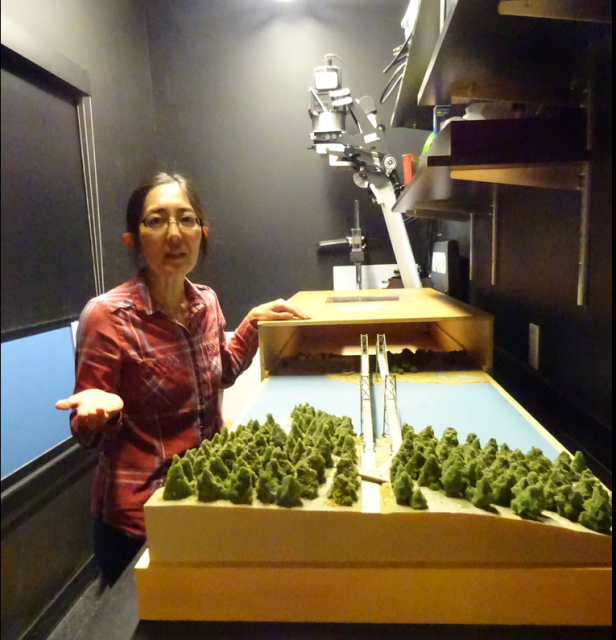
In 1994, Safdie partnered with engineering firm SNC Lavalin, and the Squamish Nation, which owned the land on the north end of the bridge.
They wanted to build an identical bridge to the east of the original structure that would carry northbound traffic, while the original bridge would carry vehicles south into Stanley Park.
As we now know, the province chose the cheapest and least controversial option, electing to widen the existing bridge and the main bridge deck.
Over half a century later we still can’t agree on a third crossing, which in all likelihood will just be a replacement for the aging 1960 Ironworkers Memorial bridge. Perhaps this time we’ll finally get rapid transit.
Related:
© All rights reserved. Unless otherwise indicated, all blog content copyright Eve Lazarus.


I remember this in the ’70’s! My parents were all for the tunnel, and my father noted that it could be connected up with the rail tunnel that was already downtown (which of course got incorporated into the Skytrain). They way they spoke, the tunnel would run under downtown and only emerge into daylight at the Granville Street Bridge? My recollection, anyway!
Regardless of the tunnel idea, I sure wish Vancouver had been more proactive over the decades, instead of just reactive, when it comes to development. Vancouver is (justifiably) proud of the fact that it has no freeways, but when the freeways were stopped, what did they do instead? Nothing. That was the mistake. They should have begun proper rapid transit back in the 1960’s and shaped the way the Lower Mainland developed, not just reacted to it. I recall reading in the 1990’s, in the Vancouver Sun, that so much of the commuting was no longer just in and out of downtown Vancouver, but from suburb to suburb, which is why I guess they finally saw the light and built the South Fraser Perimeter Rd and the Golden Ears Bridge. Still, it’s disheartening that there was better transit (the old BC Electric) 100 years ago (and more), when you could take the tram all the way to Steveston even out to CHILLIWACK and we can’t do that now. And why there was that gap of years between the ending of the old North Van ferries and the launching of the SeaBus defies logic.
The third crossing [Bridge] from Deep Cove to Port Moody or Burnaby would be a good solution. Have you seen the amount of vehicles [cars & trucks] on the roads and bridges now! People do not want to get out of their vehicles. Using heavy trucks, delivery vans, p/u trucks and other work related vehicles are a necessity and taking transit is not an option.
Think of all the pollution that idling cars produce now!
Encourage the use of EV vehicles and even consider road ways where EV vehicles can charge while driving over the electrified roads / bridge.
Agree, a third crossing from deep Cove to Port Moody or Burnaby makes good sense. A third crossing in a traffic clogged area is just going to make things more clogged.
There is a need for a larger highway to Langley and beyond also. It might need to be built before a third crossing. It may come down to politics as to which gets built first. The North Shore has been constrained by a lack of crossings but the Fraser Valley has already been expanded to. If there is a highway, then expect there to be pressure to remove land from the ALR to build houses and create a few more millionaire developers. What ever is built first, someone ought to keep a very careful eye on the process because it may get very confusing and there is so much money to be made on the sale of land then. Regardless of what is built first, lets at least this time make sure the infrastructure is there first, you know, schools, hospitals, roads, fire departments, parks, community centres, day care centres, another college or university, affordable housing for seniors, and houses which more people can afford and not million dollar starter homes, you know all those things they are short of in Surrey and other areas.
In the 1970s took a welding course at BCIT. The instructor had worked on building the Lions Gate bridge and had a black and white silent film of some of the building. Very interesting. Actually it was amazing.
Mt. Seymour Parkway was built expecting the bridge to Port Moody, via Belcarra, which today would allow commuters to go straight to the valley. Makes transit sense, however, a little more “politics” might never allow it see the light of day. Meanwhile, a recent trip from 13th to the Superstore took 1 and 1/2 hours which taught me to go before 2 pm. Enjoyed your article though.
The Mt. Seymour – Port Moody option appears to be the most palatable and financially viable?
A huge number of current users of both North Shore bridges appear to travelling beyond the North shore or the Downtown. The widening of Highway 1 on the North Shore is also a must in order to accommodate the new crossings additional traffic! This “ Third Crossing” should not be dumper on the North Shore as quick solution to this 50 plus years old situation.
There appears to no problem building new bridges and replacing old ones anywhere else in the Lower Mainland!!!
However for the North Shore, it’s appears to be a monumental problem!?!
no third crossing keeps the rif raf out.
Cars, cars, cars and more cars – create more roads, tunnels and bridges for more cars – that will fix the problem.
I remember 1971 when they proposed the tunnel idea. Some preliminary geotechnical studies were done and they drilled cores from the bottom of Burrard Inlet to see what’s down there. After the project was shelved all of the studies and engineering proposals were stored at the old Vancouver Public Library Central Branch at Burrard and Robson for many years with public access. In the 1980s remember finding and flipping through the drawing books and thought it would never fly because the proposal called for a causeway to be built out in the water very close to Brockton Point before going underwater which just plain looked ugly. Also in the 1980s I remember Premier Bill VanderZalm announcing the “twinning of the Lions Gate Bridge” which of course never panned out either. So now we are left with one-hour traffic lineups in rush hour to get from North Van over Lions Gate or Second Narrows.
Traffic problems are only going to get worse as they build more condo towers in North and West Vancouver and burgeon the upscale population.
Extending the Canada Line light rail passenger train under Burrard Inlet to Lonsdale Quay as a tunnel seems to be the most logical choice.
But good luck getting that built now that Bill C-15 requires aboriginal consultation and consent (and taxpayer payoff).
Condo towers are just getting too tall. The developers make a lot of money and the cities have a lot of expenses due to the influx of people. These high rises do nothing to create a better atmosphere for people or animals, i.e. you know, birds, wild life. It might be better if cities decided how high towers could be so cities remained human friendly. High rises ought to be required to have a % of units built to be family friendly, storage room in unit of kids bikes, etc. and a play ground also for children and not some postage stamp square of pavement but rather a grass field with trees, flowers, perhaps a community garden. People could walk there sit out side. Sitting in nature is a good way to maintain health, “green washing” There is nothing attractive about 50 towers and cement and roads.
Scientists have told us for decades we will have another large or mega earthquake some time in the future. They tell us those new towers will with stand such an event, but really how do we know. A large group of mega towers could result in a large number of deaths if they all come down. Just the clean up would keep governments busy for decades.
This summer two, separate American tourists asked me where the bridge was that went from Vancouver to North Vancouver. For both I started my reply with “good question.” People from out of town shine a light on the overall stagnation of Vancouver infrastructure, and the carelessness of all levels of BC government. I used to often tell the people I grew up with that Vancouver did it better than Seattle. But consider all of the thoughtful work that the City of Seattle had done over the last decade by the water which is now paying off. And contrast the approach of Vancouver. Some say progress is all too hard. But other cities around the world who value the environment have leapt ahead with better bridges, better tunnels, and better rapid transit.
The feds own Burrard Inlet, the province will likely own the bridge, and the crossing lands in two different municipalities. People don’t understand the complexity and needed cooperation between all 3 levels of government. Lastly, anyone who thinks the Port wants a structure or tunnel to interrupt their anchorages doesn’t know the Port.