


Story by Eve Lazarus, photos by Bruce Stewart
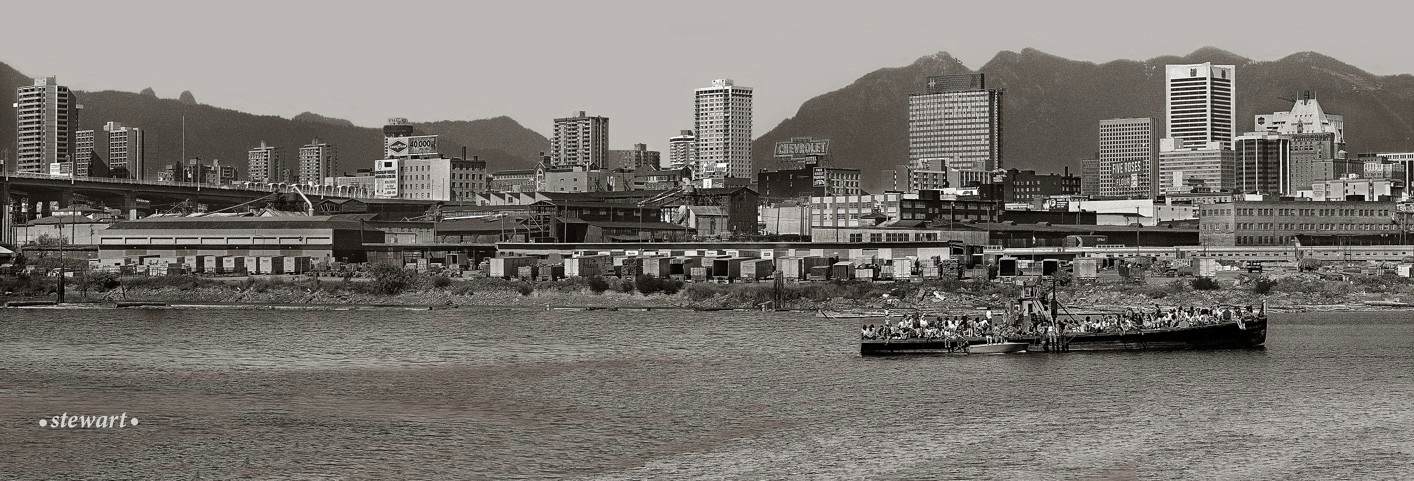
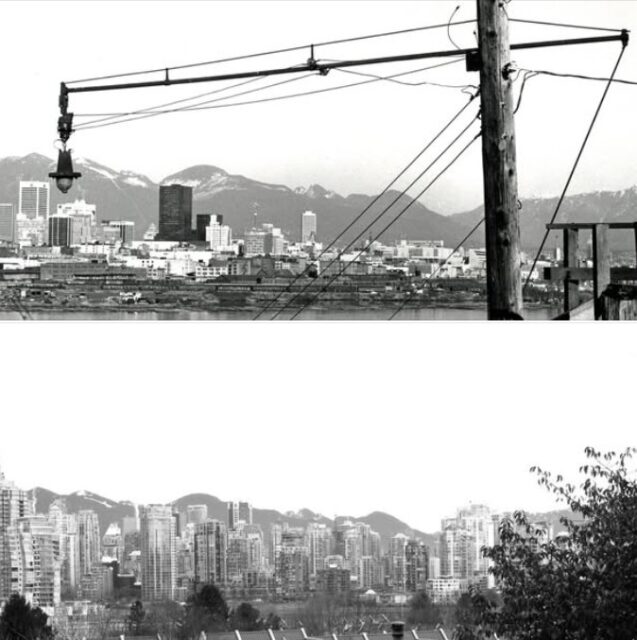
A half a century has gone by since Bruce Stewart took these photos of False Creek. By the time I arrived in Vancouver in the mid-1980s, the city was in the midst of final preparations for Expo ’86 and had already undergone massive change.
False Creek was no longer industrial, but developed into a residential, commercial and recreational area, with Granville Island at one end and Science World at the other.
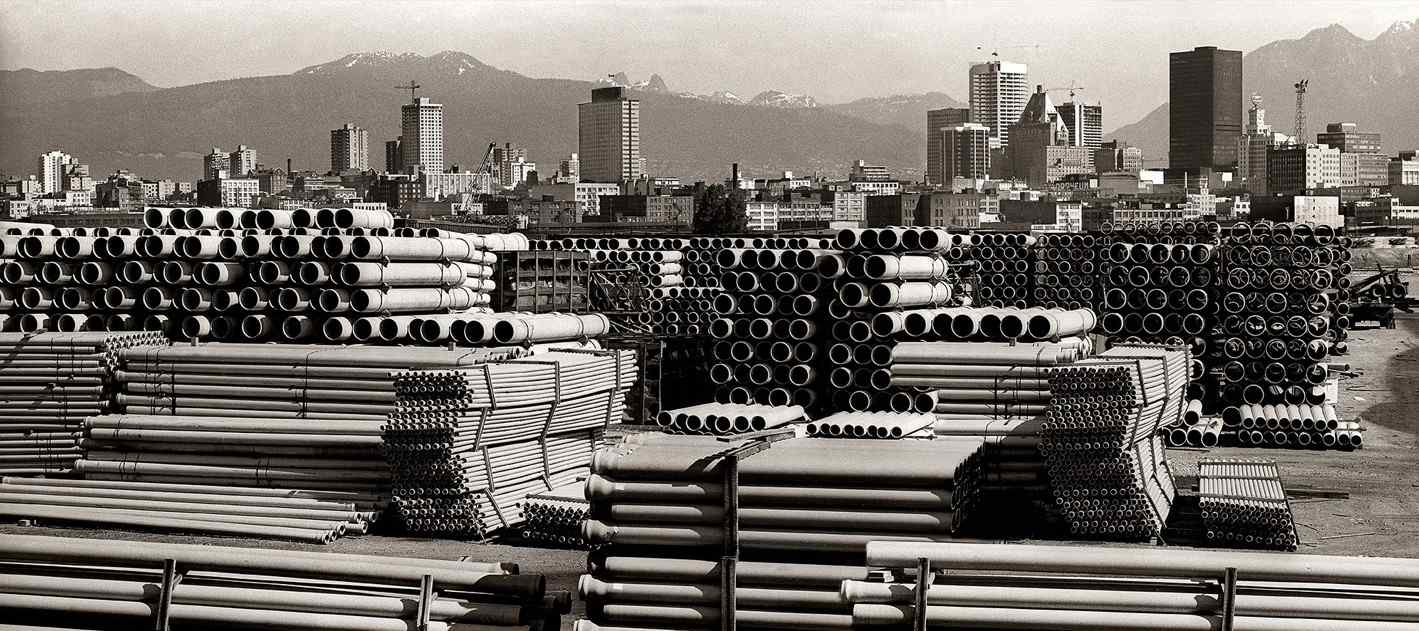
Industry:
The sawmills, log booms, slaughterhouses and canneries were gone. In their place is a model of sustainability, with housing options—that include the condos and townhouses in the Olympic Village—a school, a seawall for walking and running and biking, and a waterway filled on any given day with kayaks and canoes and dragon boats. The neighbourhood has fitness facilities, outdoor play areas, breweries and artistic venues. And, if you still have to leave its borders, downtown is just a short walk away.
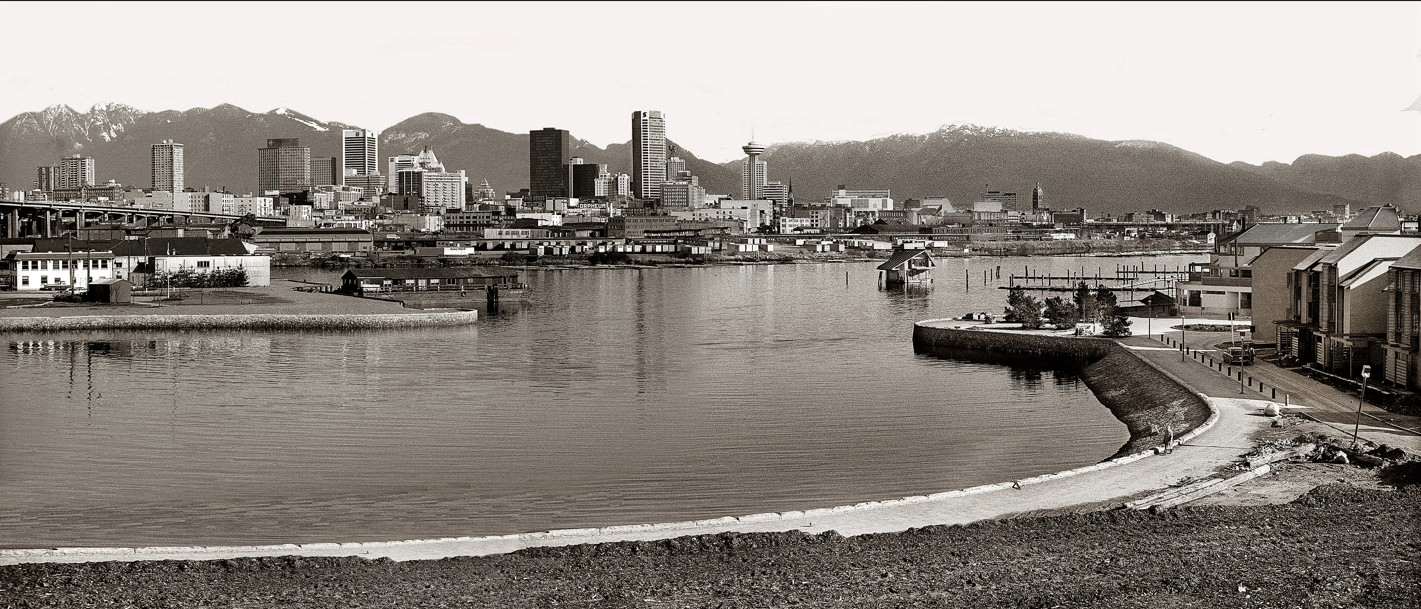
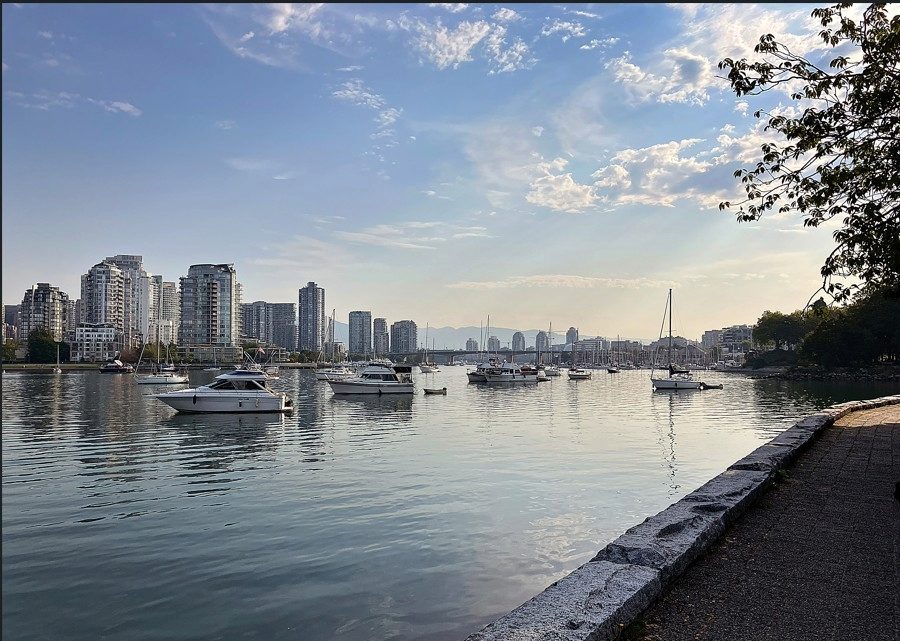
I went for a bike ride around the seawall this week to see how much has changed. Perhaps I should rephrase that. I took a bike ride around the seawall to see if anything was still the same.
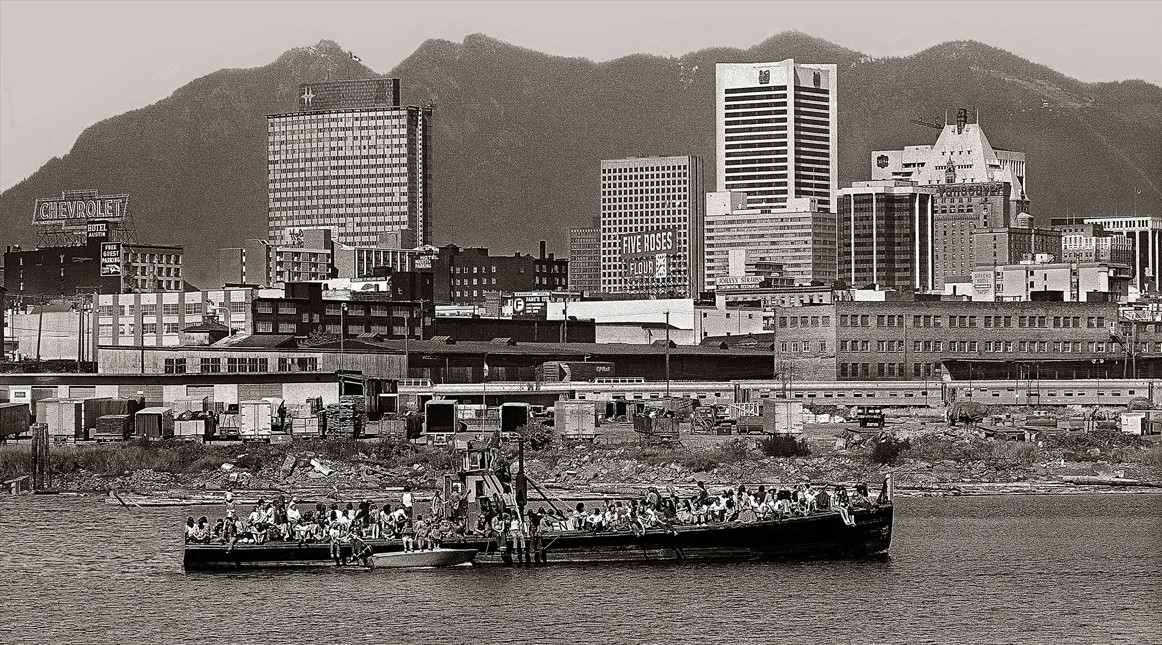
The view of the North Shore mountains in Bruce’s photos is almost obliterated in mine. What in the ‘70s were still some of Vancouver’s tallest buildings – the third Hotel Vancouver, the Royal Bank Building and the Sun Tower are now hidden.
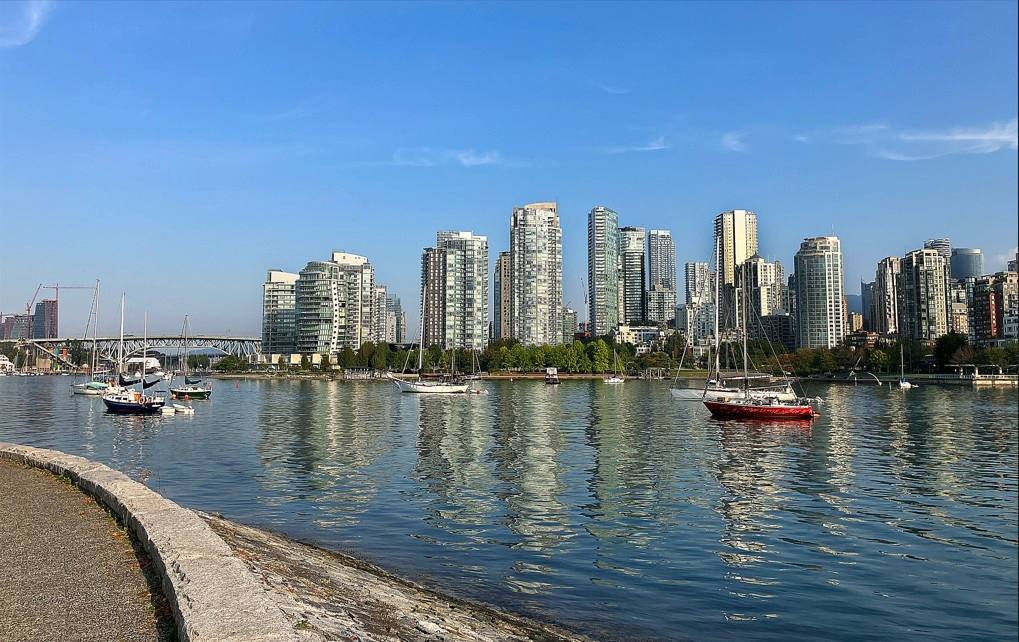
“Basically, the whole south hillside of the Slopes was torn down, along with the huge industrial site all around the Creek from Granville Island (the V.I.E.W. and Woodpipe buildings) on the west side to the whole of the east side—Bay Lumber Co., Sweeney Cooperage, Ocean Cement, etc—in a massive overhaul,” says Bruce.
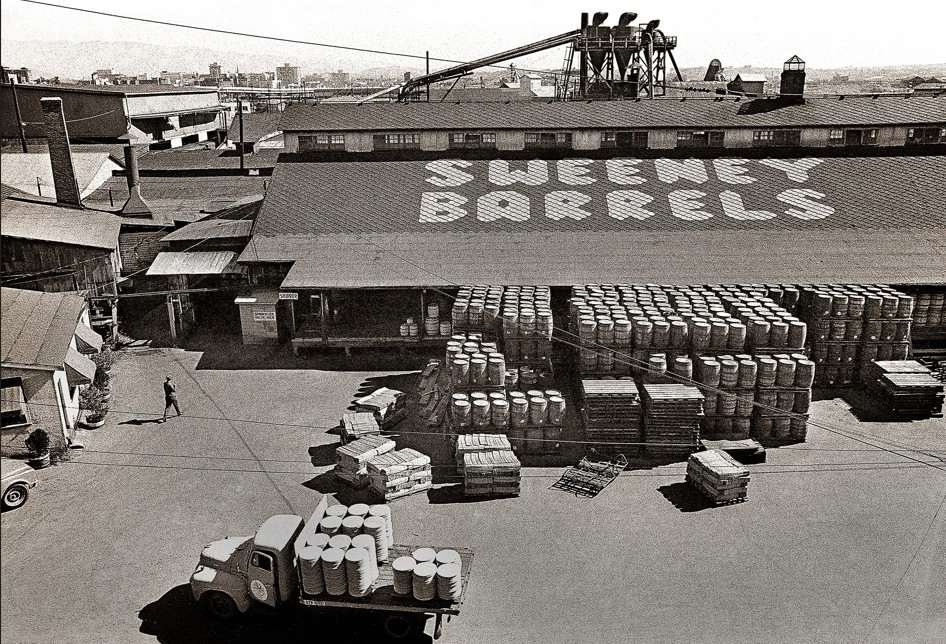
“For many years, the view I show here was accessible from all over Vancouver, from the ‘lookout’ atop Queen Elizabeth Park at Little Mountain, along the east-west corridor on West Broadway and Second Avenue.”
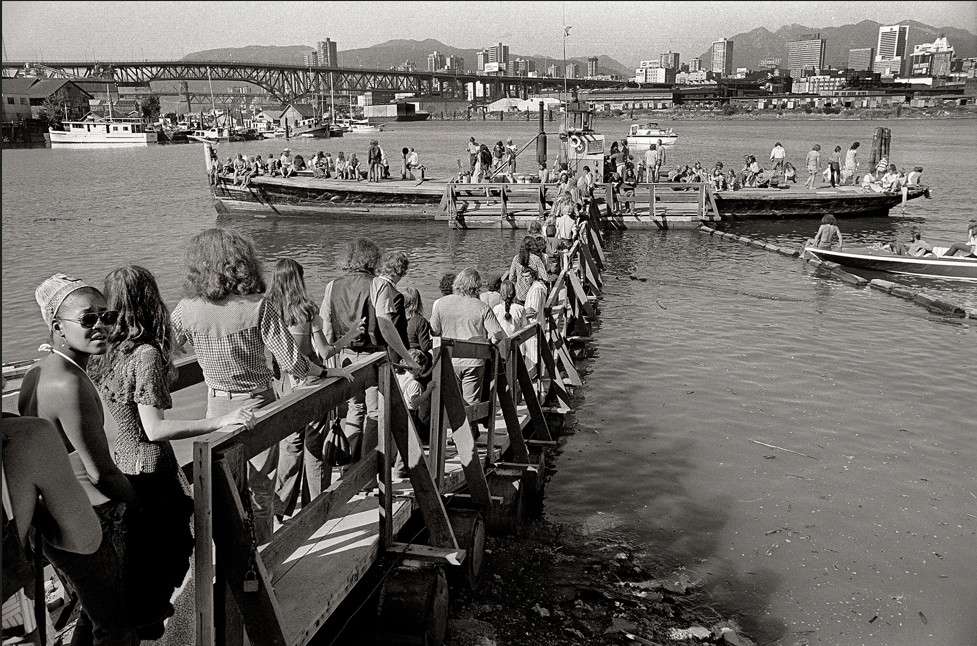
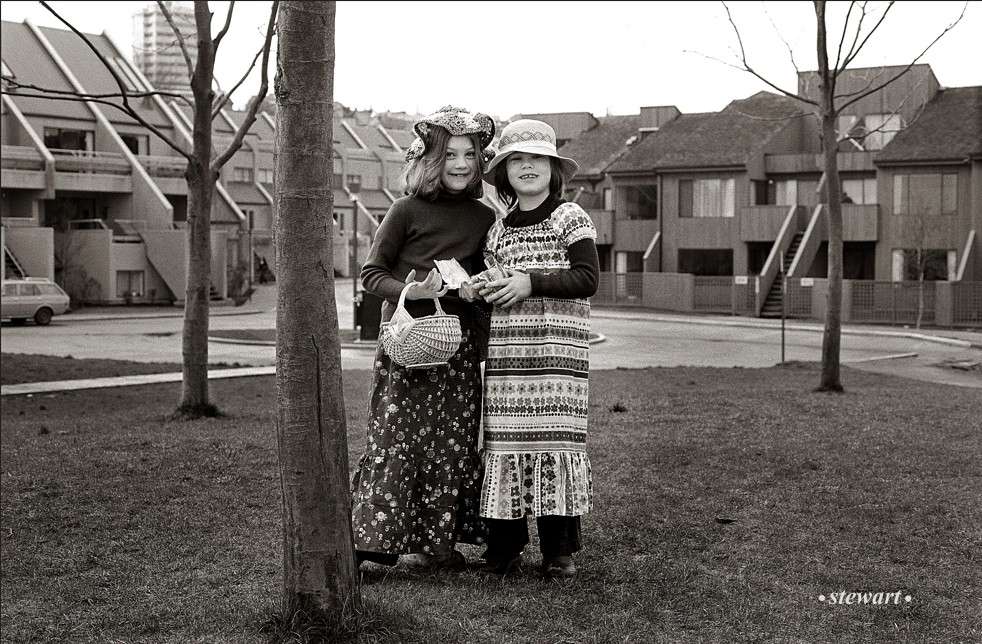
Bruce’s photos also capture the “Images of Possibilities,” a sort of hippie faire celebration he says that included local musicians and hawkers.
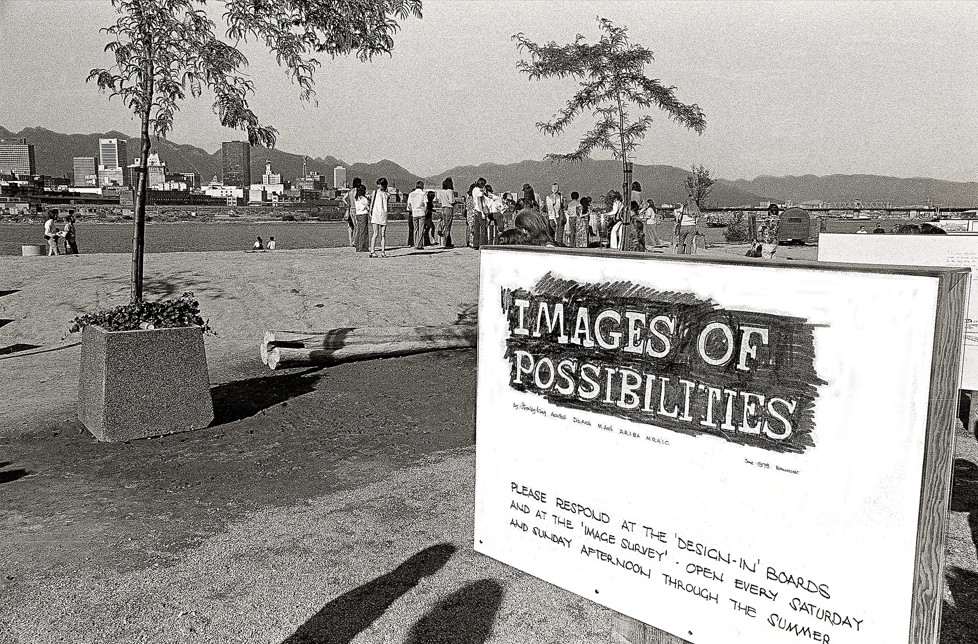
Images of Possibilities:
“The whole area, from Granville Island to Main Street was being cleared to make way for the new development,” says Bruce. “The ‘Images of Possibilities’ was ostensibly to record input from the citizens. Whether any of this was nothing more than to create a ‘paper trail’ is anyone’s guess!”
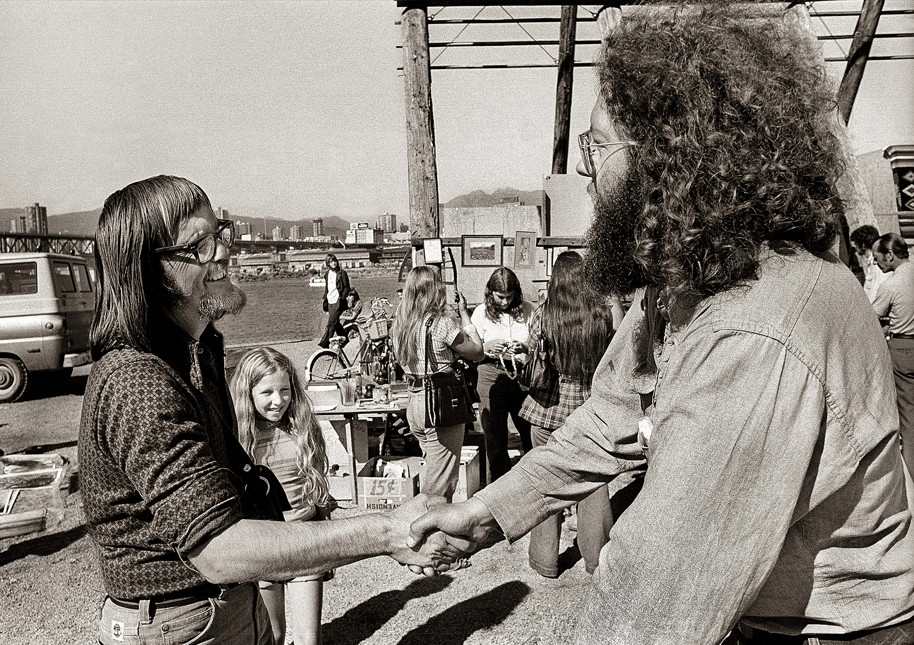
It was a sort of ‘hippie’ faire celebration with local musicians who were familiar to the times and events, some celebrities and hawkers of goods along the way.
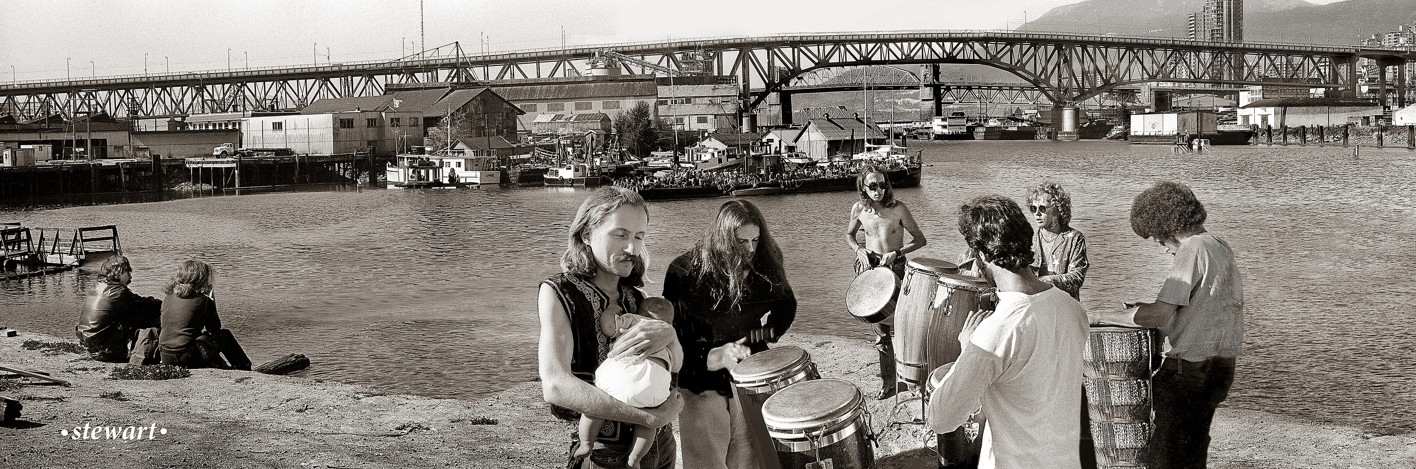
Bruce’s photos show buildings that include the Austin Hotel, BC Hydro building, St. Paul’s Hospital, MacMillan Bloedel Building, Johann Strauss Cabaret, the Burrard Building, Gifford Hotel, and on the north shore of the Creek, the CP Rail yards and Johnson Terminals.
I’m no photographer, but I took some photos on my phone for a sort of then and now comparison. My photos show a sea of glass towers.
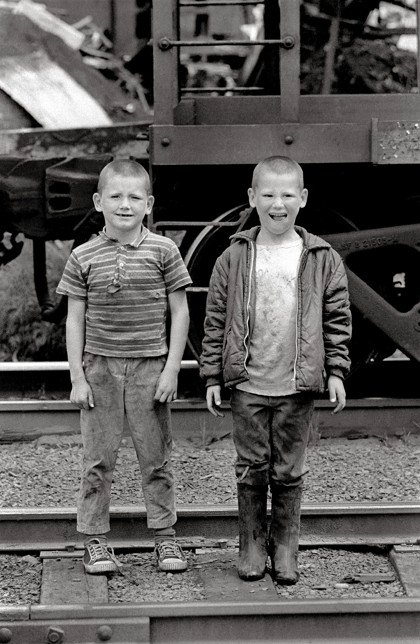
If you recognize these children from the ’70s, please let us know!
© All rights reserved. Unless otherwise indicated, all blog content copyright Eve Lazarus.


I remember the view faintly; my parents were married in Sep 1955 (70 years ago) and they lived in a small apartment at 131 W 12th Ave (still there) and my mom was horrified at the traffic on that street as she lived on a farm! They are still married and celebrating their 70th anniversary this weekend. Many changes have taken place in their lifetime, including where I live near the Joyce Collingwood station. The tall condos are an eyesore to us, because we love the mountain view so much, and now only the birds can see it. We are beginning to be a real “city” with more people, but alas, still no toilets at the Skytrain stations! Thanks for sharing the photos. I loved Expo ’86 and can’t believe it’s nearly 40 years ago.
I remember the beginning of the False Creek development mid 70s… SO many changes … some good some not so much. One thing remains true. Vancouver was and is a beautiful city …
I was a faculty member of Emily Carr College of Art (ECUAD now) which moved into a renovated Westinghouse warehouse here in 1979 to be altogether, but soon had to build another building opposite in Johnston St. It is now Arts Umbrella.
I was born and raised in Vancouver and was a teenager in the 1970’s and I remember very well what False Creek used to look like. Anything east of the old Cambie Street Bridge was nothing but a cesspool of pollution due to all the industries along the entire creek. I remember there was a big fire at one of the factures near the north end of the bridge, in the early 70’s, and there was so much smoke due to the creosol that much of the wood was covered in, that we could see it all the way over where we lived in South Vancouver. It’s a whole different world in the False Creek area now compared to what it used to be. No longer an eyesore. I haven’t been down that way for quite sometime. This story makes me want to go wander around there and check things out. Too bad there is no picture here of the old Cambie Bridge, with the old rickety steel trellis and wooden sidewalk.
Thanks again for the memories!
In November of 1979, my pregnant wife Anne, our 3 year old son and I moved into a small townhouse on the bottom floor of The Wellington Tower and Townhomes, a brand new building with the street entrance on Lameys Mill Road and the other entrance on Island Park Walk. We had a view of the North Shore mountains and the tiny bay that is now called Alder Bay. We were struggling financially and we were lucky enough to secure a subsidized unit. Anne could walk to the brand new Granville Island Market for our groceries and she soon knew all the grocers by name. I had a job in construction and was away most of the day, but only for 5 days a week. We were in heaven.
I lived in the Wellington in 1979 right on Island Park Walk – single Mum with two kids
Long ago, but in my fond memories. I was born in Vancouver and I still love it! I moved to Surry in ’92 in search of a quieter place, but since that time, Surrey has grown all around me. Can’t get away from roadwork delays because they are everywhere!
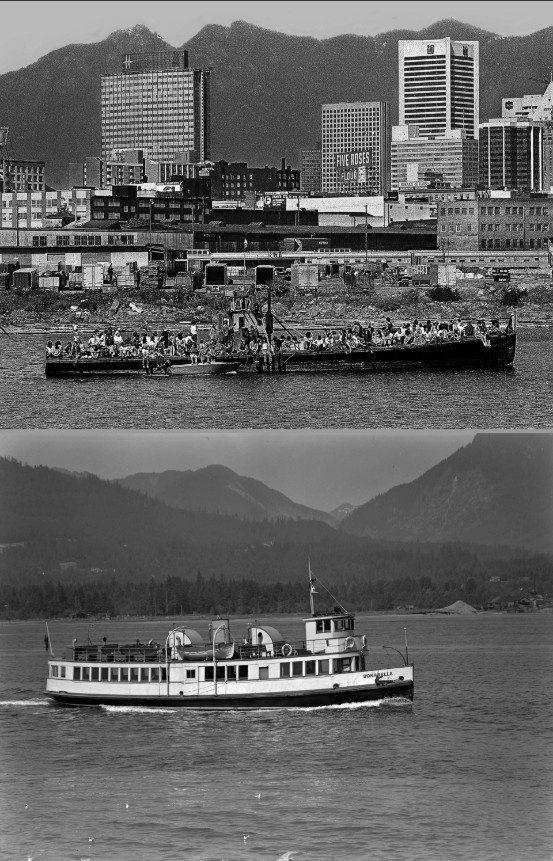
I stand to be corrected, but I think that the ship hull crowded with people in several of the pictures belonged to the former West Vancouver ferry Bonnabelle. It was built in 1935 and sailed between Ambleside pier and a dock at the foot of Main Street continuing in that service until 1947.
Odd you should mention that, we talked about that yesterday. I didn’t think it looked anything like it, but Bruce disagreed and I think you’re both right. I’ve added Bruce’s photo of both boats side by side to the post.
I moved to the West End from Montreal in 1974. I remember when I first drove down Davie Street and crossed the tracks close to where Pacific Boulevard is now. Yaletown was still very much a warehouse district and the north shore of False Creek was littered with industrial waste. One of my major clients was CP Trucking, whose vehicles were serviced at the (as yet unrestored) Roundhouse. It was always quite an adventure to go down there but nothing compared to the day I dropped in and discovered Locomotive 2860 (later the Royal Hudson) beside all the highway trucks. The giant turntable was also fully functioning. Look closely at the fourth Stewart photo, in the lower right, and you will see the carriages of The Canadian, no doubt awaiting a freshly serviced locomotive. In those days The Canadian was still transcontinental and the crew got on at the Drake Street yards by the Roundhouse before heading off to board passengers at what’s now Waterfront station. The transformation of the area through Expo and afterwards was quite remarkable.
We had trains in my neighbourhood too. The two photographed boys look to have been crawling under the train cars judging by how filthy they are.
I remember getting a ride somewhere with my younger brother around 1970, and we stopped in at a place on Granville island to get some cheaper gas for his vehicle. It was completely industrial then, and unless you worked on the island, there was not much need to visit it..
Loved your article on false creek as point of note & For all you nostalgic expo 86 folk or those too young to be one
something to look into is 139 yr. old 1st train into Vancouver namely ENGINE 374 At the roundhouse Yaletown which so happens is not as I & other think is run by the VPB roundhouse but run by a gallant crew of Volunteers of The WEST COAST RAILROAD ASSOCIATION whom have now computerized the brick registry so one can look up the actual brick quickly
To those who didn’t know In 1983 Vancouver Parks Board were set to scrap Engine 374 due to there neglect in up keeping this historical locomotive being 1st passenger train & Trans-Canadian into Vancouver 1st silk train out of Vancouver Esso had been given the historic roundhouse for Expo 86 but lacked a train a group called the friends of 374 were campaigning to save the locomotive so they joined forces
Esso came up with buy a brick campaign in ESSO gas stations in BC you could apply for a brick cost $19.86 many folk & corporations & participating countries endeavored to do
So if you had bought a brick to save the train or your folks did or may have done being as did 20.000 others did you can go seek it out, they also have the 1946 – 1963 original STANLEY PARK STEAM TRAIN as well as lots & lots of photos & memorabilia
A bonus for those who traveled on the TRANS-CANADIAN TRAIN the train from & to Montreal or Toronto & all point in-between
they recently acquired the ORIGINAL TICKET BOOTH
As for kids there is a wooden toy train table set up & for us older kids a chance to ring the bell & learn how to drive a train sit in the driver’s spot & an inexpensive extensive second-hand books sale which goes to the upkeep of this diamond of a place
I found out all this when I visited them on the one day they take her outside & fire up the whistle the 3rd Sunday in May
PLUS IT IS FREE (A DONATION BOX IS AVALIABLE TO HELP THEM KEEP THE PLACE GOING) but a gem of nostalgia most folk just walk past & free or small donation are most welcome
The photo of the two girls could not have been 1973 as the first housing didn’t begin construction until 1976. The first leases were for 60 years, expiring in 2036. Curious to know when that photo was actually taken.
To Sharon Yandle – thanks so much for that correction! I wish I a better system to nail the dates for the many thousands of pictures I have taken over the last sixty years on street themes – in fact on all themes I have documented. Nowadays, I wished I had kept a running pocket diary of my work for dates and locations, but truthfully, I never thought that any of this material would ever have any value at all, but for my own interest and curiosity. In fact, once Fred Herzog was over to Victoria for a visit and I asked him over supper at my home, long before he was famous what he thought the final destination would be for his many thousands of slides. Thirty years ago he imagined most would be dumped into a green trash bin and hauled away to a city dump. And, he was dead serious. He had no aspirations for any sort of ‘legacy’ to go on. In fact Fred thought quite dimly of any sort of fame or ‘legacy’. Most people thought that was reverse hyperbole and his notions could simply not be true.. Not so. I knew him better.
I joined a hippie cruise up indian arm on the Bonabelle when I was a kid.
Fantastic photos, Bruce! They sure make me yearn for the “good old days”. I started documenting my view of the city not long after this, but in the 70s I wasn’t yet much interested in architecture or urban development.