


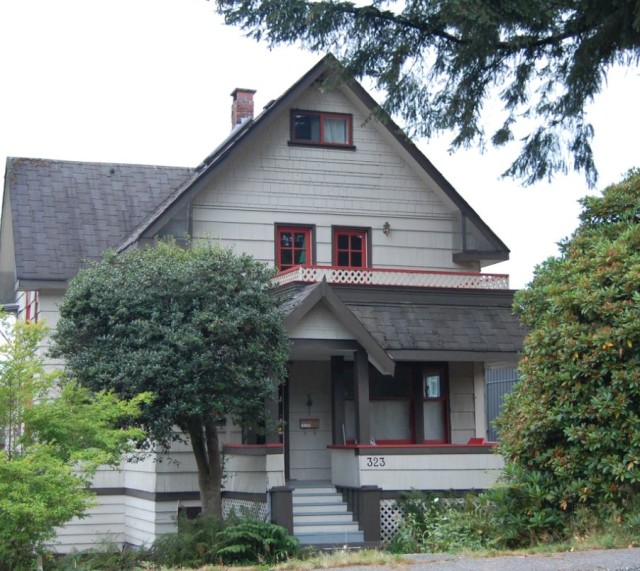
Almost 40 years ago, Rosemary Eng and her husband Alan Merridew moved to Vancouver from Chicago to take up a job at the Province. They bought the 100-year-old North Vancouver house, raised their son Peter now 38, and as Rosemary prepares to pack up and leave, she has written the story of her house.
By Rosemary Eng
When we looked at the house at 323 East 24th Street in 1976 it felt like we were in a forest. The house was dwarfed by two big Douglas firs. Cedars and Douglas firs towered in the yards on either side. Ferns were everywhere.
We chose this house because the owner, Art Grice, a photographer had custom built a photo darkroom with sinks, counters for photochemical trays, drying racks and a ventilation system. We couldn’t believe we could own a professional photo darkroom in our own home.
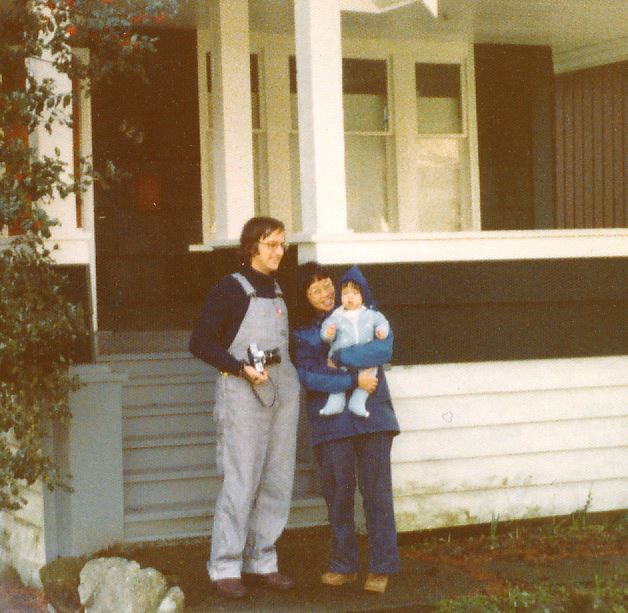
Since then, the bigger of the Douglas firs was hit by lightning and had to be cut down, new neighbors did away with all their trees, and digital photography usurped photographic film.
While documenting heritage houses for the North Vancouver Archives, Suzanne Wilson, found a building permit for our house that was issued to D. B. Joy in 1913 for what looked like a small shack. A second permit was issued to the same Mr. Joy in 1920 for a house with one-and-a-half storeys and front veranda.
City directories show “Theo” Joy was a motion picture projectionist at the Royal Theatre at Columbia and Hastings and at various Vancouver theatres until he sold the house to George L. Watts, a branch manager of Maytag Co. in 1940.
George might have been the same man who came to the house some 15 or 20 years ago asking to have a look inside. He and his family lived here in the 40s, and he told us they hosted dances. He wondered what happened to the big Douglas fir where they hung a swing for their son, who would be about 70 now.
The war years were reflected by a number of occupants who worked at North Vancouver Ship Repairs and Burrard Dry Dock.
Thaddeus Halpert-Scanderbeg, a lecturer at University of British Columbia bought our house in 1949. He lived here with his wife Marie and two sons because he couldn’t return home during the war. After hunting high and low I found their grandson Richard living almost blocks away. He told us that his grandparents lived here with his father Tadeusz and his Uncle George. The family moved to another house in North Vancouver when Tadeusz married in 1953. Richard’s grandfather had been a diplomat in the Polish foreign service, and was forced to escape from Poland when the Communists took over after the war. Richard’s grandmother, Marie (Wielopolska), was a countess and the family’s home in Poland would have been impressive.
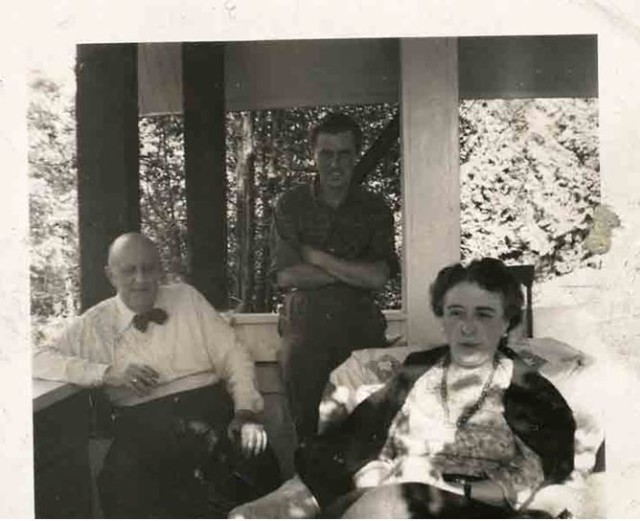
G.H. Littler, a carpenter, and his wife, Margaret, lived here during the ‘60s and sold to Art and Emily Grice’s in the ‘70s. We hope that the next family will love the house as much as we did.
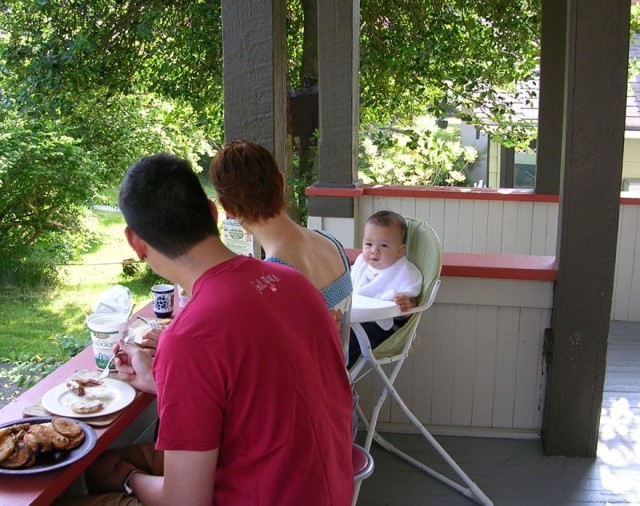
Our house
Shortly after Rosemary and Alan moved in they were denied a mortgage from the Bank of Montreal. Rosemary figured the decision was based on the aesthetics of the house.
I started stripping five old, thick layers of multi-hued paint from the wood paneling in the front foyer and staircase. We tore down old wallboard and replaced it with gyproc and repainted rooms. The mortgage renewal was granted.
In ongoing renovation carpenters pointed out how the house’s frame showed little signs of age because of construction with western red cedar which is decay and moisture resistant, and the generous use of Douglas fir, including thick fir flooring.
The initial house was heated with a wood-burning stove in the kitchen. Vents above the stove opened to let warm air rise to the second floor. Hot-water (radiator) heating was later installed, fueled by sawdust burned in a cast iron, vault-like boiler. Without any pump, hot water circulated through the house by gravity, hot water rising and cold water falling. We replaced the old boiler with a more efficient one, which requires an electric spark to start the furnace. The old system had its merits because it required no electricity to start up. The same with the gas stove installed in the’ 40s when the house was hooked up to natural gas. This used to be the only house in the neighborhood which had heat and a working stove during power outages.
We learned that old architecture used common sense by incorporating overhangs to keep rain off exterior walls, a feature valued more following studies of leaky condos. Old-fashioned steep-pitched roofs were designed for better snow and rain runoff. A team of firemen who worked on our renovations, said balloon framing in old houses such as this allows the house to “give” in earthquakes. Mr. Roe’s cinderblock house, on the other hand, cracked during the last small earthquake. And no matter how hot the weather, the front veranda is always cool and breezy. These were all features we learned we were lucky to have as we got to know this house over the years.
We tried our best to take care of this house, but at the end of the day, it was the house which took good care of us. It will be sad as we prepare to say goodbye.


Thank you for always providing such well researched articles. It is always a trip down memory lane as I was born in North Vancouver and lived there until I was married in 1968.
This fine home felt like my own during a visit with Rosemary. We share a long friendship that began when we were reporters on what is now the San Diego Union- Tribune. Over the years she has kept me in touch about the work she has done and has hired done, including graceful features carpentered by a crew of off-duty firefighters. There is a mellow, gently embracing quality you feel in some houses like this one that have been filled with love and life for generations. I particularly remember sleeping sweetly there, and its situation near the crest of the hill often captures a breeze touched with the scent of salt water. Sure that Rosemary is sorry to leave this treasure to the lucky family who discovers it, I know she does so to enjoy the greater treasure of her grandchildren. Brynmor in the photo on the porch is now old enough to have her read to him via Skype, but it is not as good as being able to climb on grandmother’s lap, hold the book, and read along with her.
Hi
Don’t you have any more photos of Thaddeus and Marie Halpert-Scanderbeg? I am from distant place from Poland Szczekociny from where this couple originated. We with few friends are preparing now a historical yearbook with a long article about the Halperts
I will be greatful for any help
Hello Janina,
I am in contact with the director of the Historical Society in Szczekociny Marek Gradon and he already has all of our Family photos. The photo in this article is from my collection.
Richard
I’m afraid that the photo in the blog is the only one I’ve been able to find so far. I’ll let you know if I come up with anything else.
Richard
Thank you for researching and sharing the history of this house. I came across this article as I saw the house for sale and am very interested in it. It would be so exciting to be apart of its history and maintain its beauty.